
Detailed explanation of the latest international trade terms
On the vast stage of international trade, the transaction method can be regarded as a key hub. It not only outlines the specific operational process of the transaction, but also precisely delineates the allocation boundaries of responsibilities, risks, and costs between the two parties, which has a direct and far-reaching impact on the risk management and cost control of the transaction. Once the trade contract is officially signed, foreign customers will demand that you strictly deliver the goods in accordance with the terms agreed upon in the contract. Therefore, foreign trade operators must have a clear understanding of various trade transaction methods and choose the most suitable export transaction method for themselves, which is crucial. If you make a slight mistake and agree to some difficult customer requirements, you may fall into a passive situation.
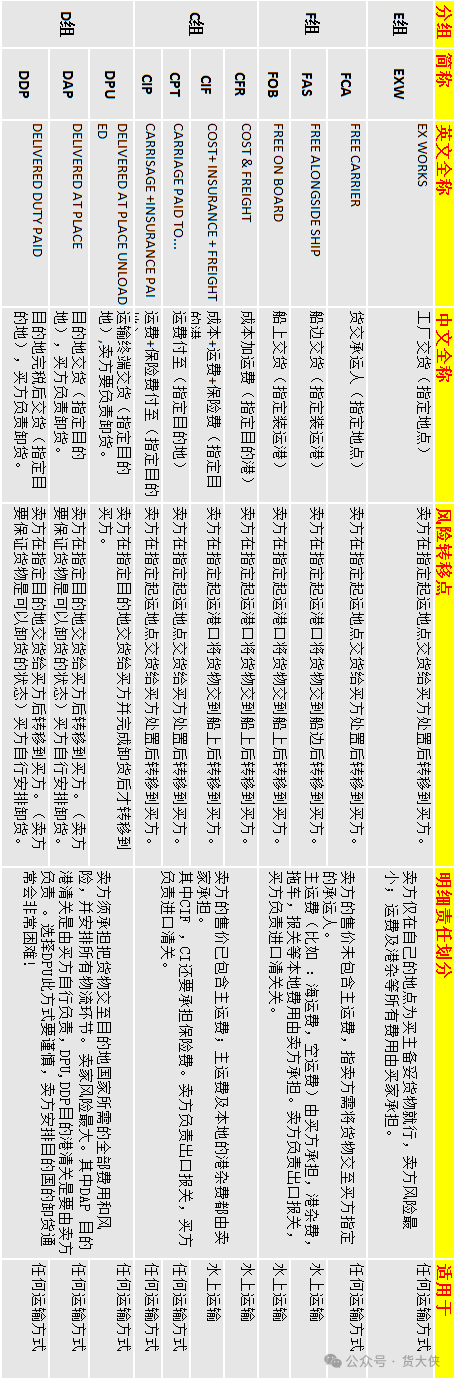
Below is a detailed list of various trade terms that I have carefully compiled (excerpted from the International Chamber of Commerce ICC 2020 edition), hoping to help you make the most ideal choice based on your actual situation.
The table below is too long, please make sure to look at your phone horizontally:
Additional explanation for some easily confused terms:
Below is a detailed list of various trade terms that I have carefully compiled (excerpted from the International Chamber of Commerce ICC 2020 edition), hoping to help you make the most ideal choice based on your actual situation.
The table below is too long, please make sure to look at your phone horizontally:
Additional explanation for some easily confused terms:
FCA, CPT, CIP: The risk transfer point under these three trade terms is when the goods are handed over to the first carrier. The seller shall ensure that the goods are delivered to the carrier at the designated location, and any subsequent risks and expenses shall be borne by the buyer.