Three major trends for the future development of industrial parks in Thailand
one The gradual recovery of the world economy and the recovery of overseas investor sentiment will help promote exports;
two Enterprises are shifting their investments from major economies (most notably China) to the ASEAN region in order to avoid potential worsening geopolitical pressures;
three The construction progress of government supported infrastructure projects, especially in the Eastern Economic Corridor, is accelerating 4. Government tax and non tax incentives aimed at promoting investment. Industrial park operators will tend to transform and provide "smart parks" equipped with a complete set of modern technology services, and pay more attention to environmental issues when targeting industrial customers related to the bio circular green (BCG) economy. Suppliers will also expand their business partnerships, enabling them to better provide comprehensive services to their customers and tenants.
The main risk factors that may plague the market in the future include the increasing attractiveness of peers in Thailand (which can provide more production factors) and the decline in Thailand's competitiveness compared to other countries in the Asia Pacific region.
01 · Enterprises may be more inclined to relocate to industrial parks, and in the future, they will mainly focus on investing in land purchases
The industrial park has been equipped with necessary infrastructure, public facilities, and transportation connections. Conducting business in industrial parks may also bring economic benefits to enterprises, and by doing so, they are eligible for government incentives such as tax reductions or other forms of investment support.
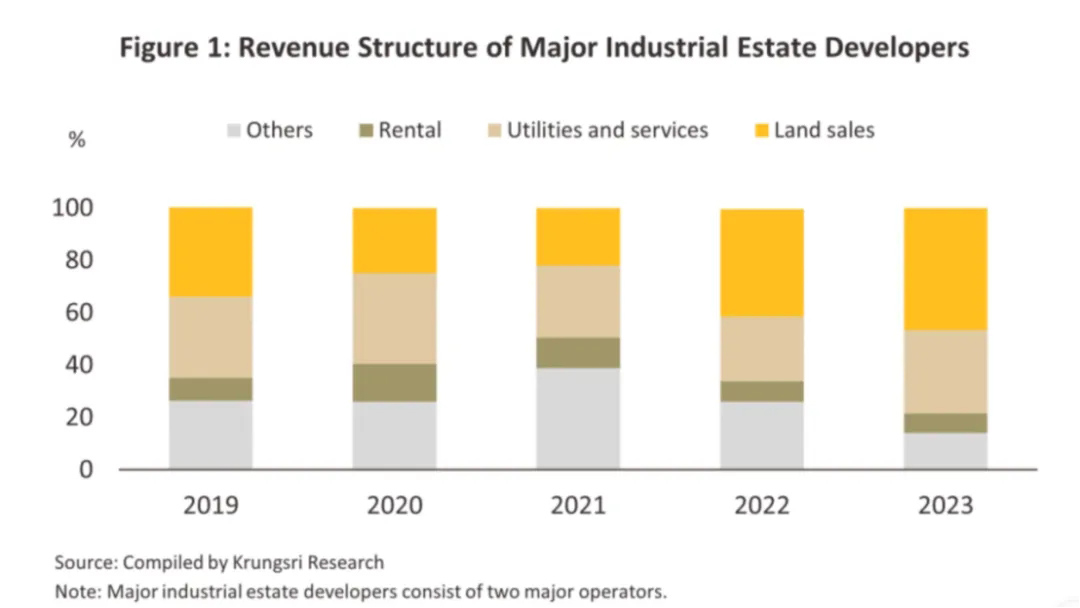
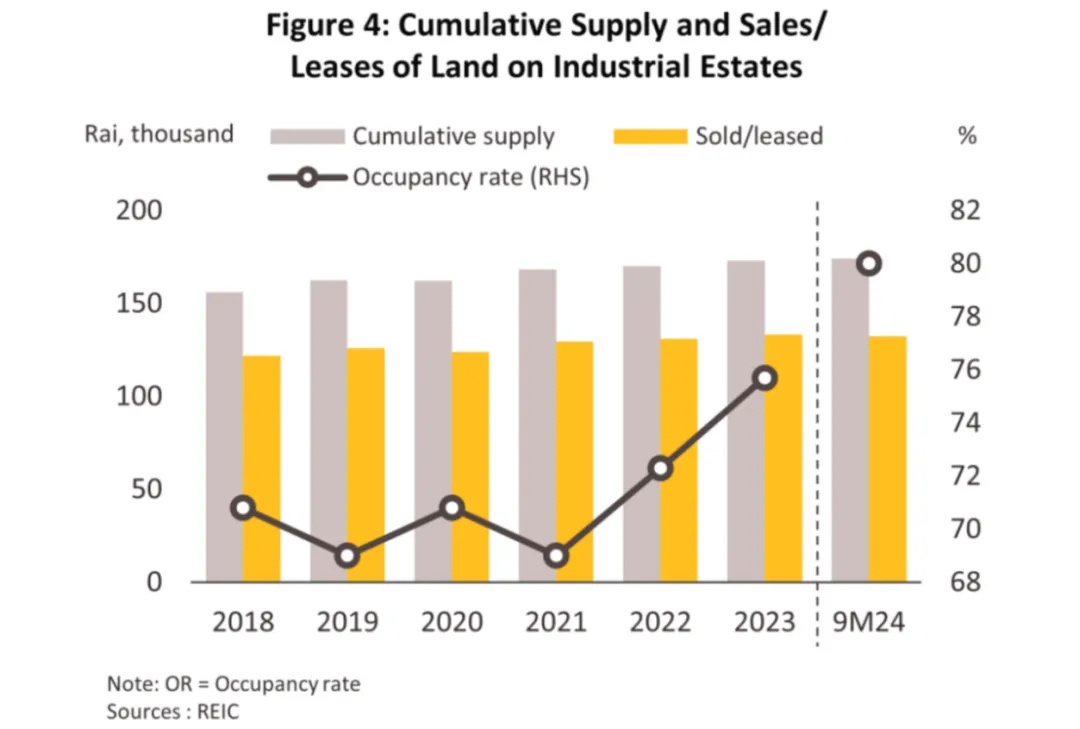
The following data indicates that from 2019 to 2023, the proportion of land sales revenue in the income structure of the park has been increasing, while the proportion of leasing has decreased. Therefore, in the future, more Thai investors tend to buy land and build factories in industrial parks themselves, rather than directly leasing factory buildings in the park.
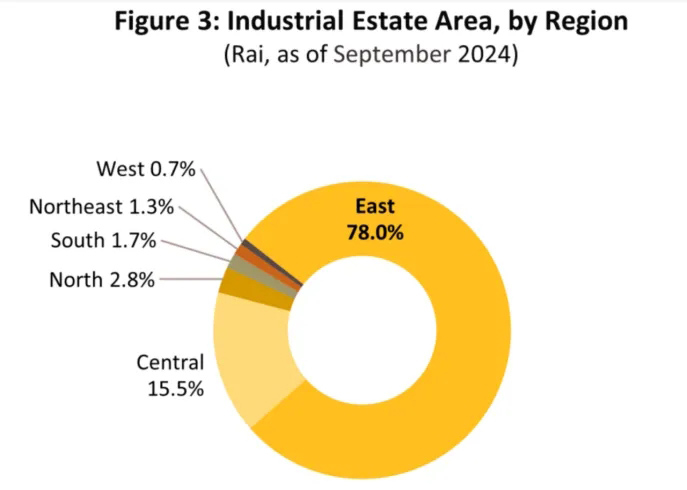
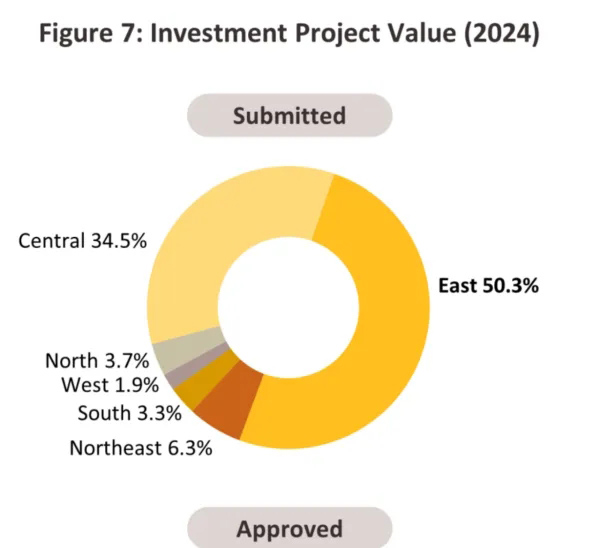
Eastern Industrial Park: Due to strong growth in rental space demand, the revenue growth of operators in the eastern region will tend to be higher than other regions. The government's investment in infrastructure will promote the further development of the Eastern Economic Corridor in Chumphon, Rayong, and Norodom provinces (with an expected addition of Bazan province by 2025), thereby stimulating market development and attracting more domestic and foreign investors, especially those in industries that the Thai government focuses on supporting. In the near future, due to the continuous rise in land prices and the increasing difficulty of finding suitable new locations, the supply of new space (including new construction projects and expansion of existing parks) will tend to be limited.
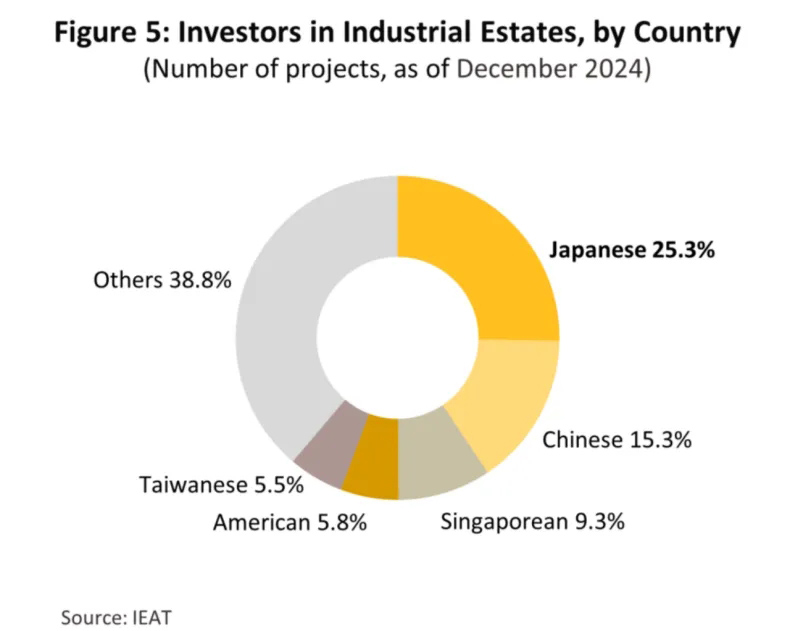
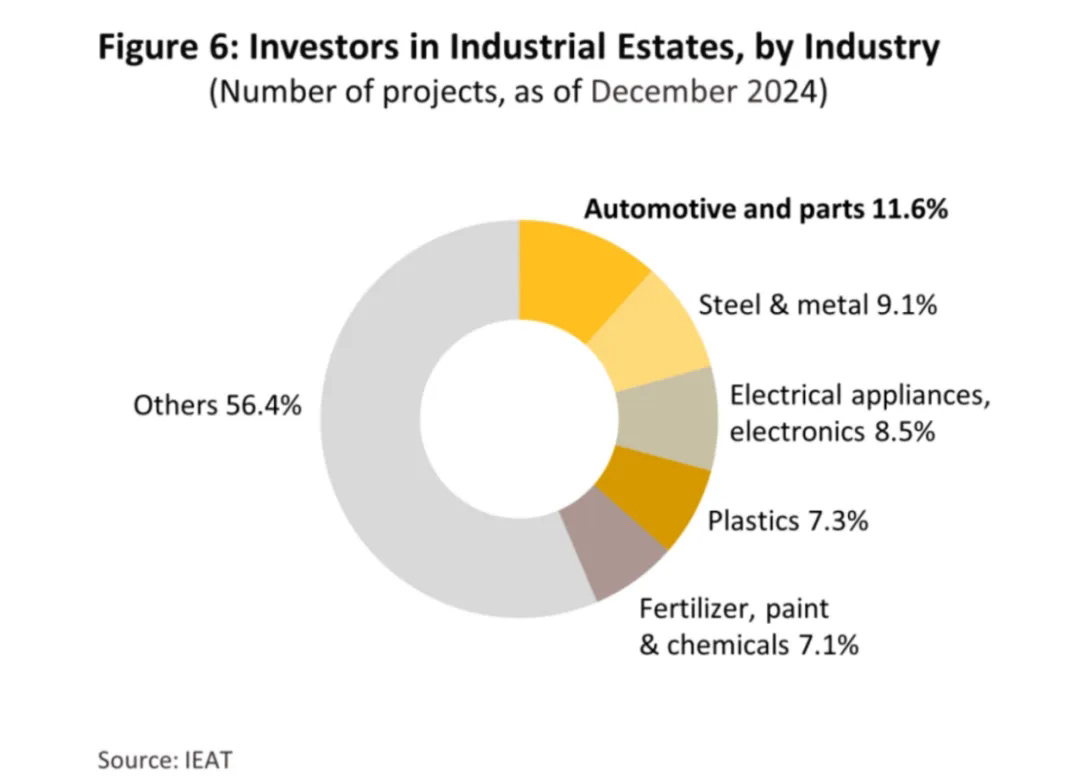
At present, the industrial types of industrial parks in Thailand are still mainly traditional industries such as automobiles, steel, and metal smelting. However, with the Thai government's implementation of the "Thailand 4.0" strategy, which prioritizes the digital economy as a national development focus and introduces a series of preferential policies to attract technology investment, Thailand will shift from traditional heavy industry manufacturing to high-precision and cutting-edge technology industries. With tech giants such as TikTok, Google, and Amazon establishing data centers in Thailand, and BYD investing in building factories in Thailand, we also see that the strategy has achieved initial results. I believe that in the near future, more high-end manufacturing industries such as biopharmaceuticals, new energy vehicles, and new energy storage will land in Thailand.