
Classification of Industrial Parks in Thailand
Thai industrial parks are developed and managed by the Industrial Estate Authority of Thailand, abbreviated as I-EA-T, which is under the jurisdiction of the Ministry of Industry of Thailand. In addition, I-EA-T is responsible for the development of industrial ports, promoting and standardizing the management of industrial parks. As of now, I-EA-T has established a total of 68 industrial parks in 16 provinces across Thailand, including 15 self operated industrial parks, one industrial port, and 53 joint venture industrial parks.
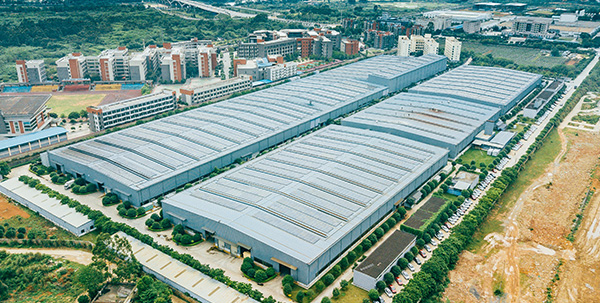
Industrial parks in Thailand are divided into three categories:;
General industrial zone: a designated area used for manufacturing, service, or other related industrial purposes;
IEAT Free Zone: A designated area for manufacturing, commercial or other industrial and commercial purposes that are beneficial to the economy, maintain national security, public welfare, environmental management, etc. Products entering the area will enjoy tax incentives in accordance with the law..
Special Economic Zone (SEZ): The I-EA-T Industrial Park Management Bureau has established industrial parks in two provinces of the SEZ, namely Sarawak Province adjacent to Cambodia and Songkhla Province adjacent to Malaysia, attracting industries mainly including agricultural products, clothing, leather industry, rubber industry, logistics, electrical and electronic products, machinery and parts industry..
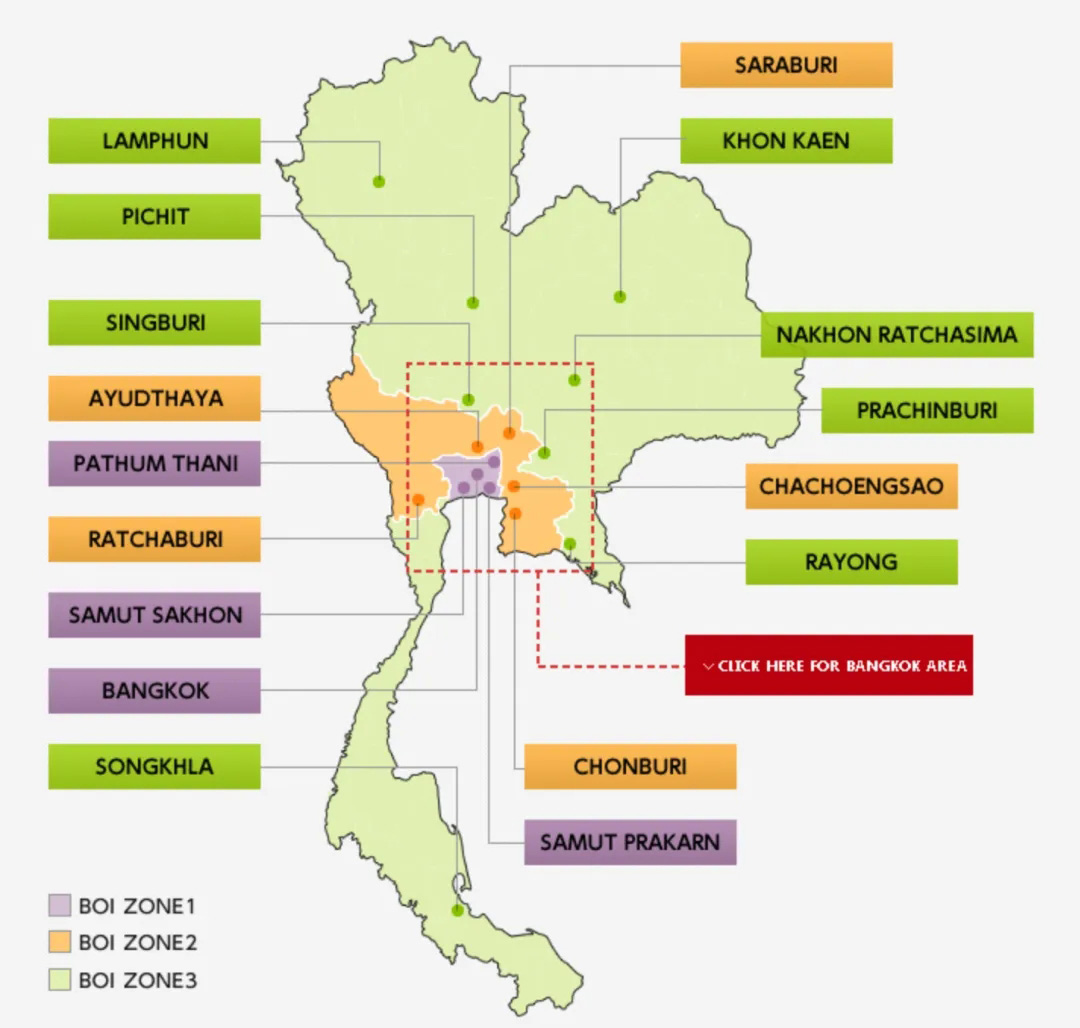
Operators who settle in the aforementioned industrial zones can enjoy dual preferential benefits provided by IEAT, including basic preferential benefits (non tax related) and tax related preferential benefits:
Basic preferential rights (applicable to general industrial zones and free trade zones):
1) Land ownership within industrial zones
2) Allow the introduction of foreign experts and technical personnel to enter the country for work, and provide visa and work permit services
3) Allow spouses, children, and dependents of foreign experts and technicians to enter the country and provide visa services
4) Allow foreign exchange to be remitted overseas
01 · Tax Preferential Treatment (Free Trade Zone)
For machinery, equipment, tools, and appliances necessary for the manufacture of goods or commercial purposes, including their parts, as well as goods used for the construction, assembly, or installation of factories or buildings within the free zone, within the quantity approved by the committee, special fees stipulated by the Investment Promotion Law, including import tax, value-added tax, and consumption tax, shall be exempted;
Goods imported into the free zone for manufacturing or commercial purposes shall be exempt from special fees stipulated in the Investment Promotion Law, including import tax, value-added tax, and consumption tax, in accordance with the prescribed rules, procedures, and conditions;
According to Article 2 above, goods imported into the free zone, including products, by-products, and other items manufactured within the free zone, are exempt from export tax, value-added tax, and consumption tax if exported. According to the first article, goods transported into the free zone also include goods transported from one free zone to another.
02 · Advantages of staying in an industrial park
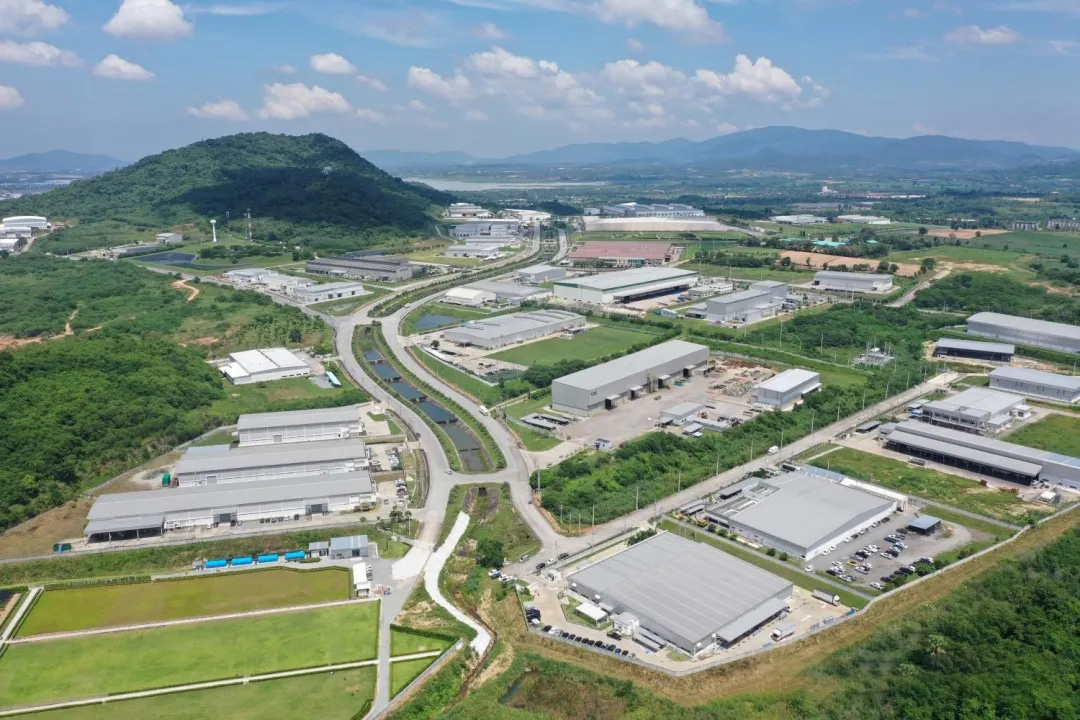
Enjoy policy support:Foreign funded enterprises have the opportunity to independently obtain land ownership and enjoy relevant investment preferential policies;;
Advantages of Industrial Agglomeration:Industrial parks generally have clear industrial planning, making it easy for enterprises to find relevant supporting services, as well as facilitating information sharing, technical exchanges, and market expansion among enterprises;;
Infrastructure improvement:The park can provide adapted public utility systems, facilities, and services, such as five connections and one leveling or seven connections and one leveling, to improve the efficiency of enterprise factory establishment;; Some parks can provide additional facilities such as training centers, communication centers, clinics, or shuttle services, and enterprises can enjoy convenient facilities;
Classification of Industrial Parks in Thailand
Industrial Park Classification
Industrial parks in Thailand are divided into three categories:;
General industrial zone: a designated area used for manufacturing, service, or other related industrial purposes;
IEAT Free Zone: A designated area for manufacturing, commercial or other industrial and commercial purposes that are beneficial to the economy, maintain national security, public welfare, environmental management, etc. Products entering the area will enjoy tax incentives in accordance with the law..
Special Economic Zone (SEZ): The I-EA-T Industrial Park Management Bureau has established industrial parks in two provinces of the SEZ, namely Sarawak Province adjacent to Cambodia and Songkhla Province adjacent to Malaysia, attracting industries mainly including agricultural products, clothing, leather industry, rubber industry, logistics, electrical and electronic products, machinery and parts industry..
Preferential policies for entering the park
Industry Benifits
Operators who settle in the aforementioned industrial zones can enjoy dual preferential benefits provided by IEAT, including basic preferential benefits (non tax related) and tax related preferential benefits:
Basic preferential rights (applicable to general industrial zones and free trade zones):
1) Land ownership within industrial zones
2) Allow the introduction of foreign experts and technical personnel to enter the country for work, and provide visa and work permit services
3) Allow spouses, children, and dependents of foreign experts and technicians to enter the country and provide visa services
4) Allow foreign exchange to be remitted overseas
5) Projects approved by BOI can receive more investment preferential treatment
01 · Tax Preferential Treatment (Free Trade Zone)
For machinery, equipment, tools, and appliances necessary for the manufacture of goods or commercial purposes, including their parts, as well as goods used for the construction, assembly, or installation of factories or buildings within the free zone, within the quantity approved by the committee, special fees stipulated by the Investment Promotion Law, including import tax, value-added tax, and consumption tax, shall be exempted;
Goods imported into the free zone for manufacturing or commercial purposes shall be exempt from special fees stipulated in the Investment Promotion Law, including import tax, value-added tax, and consumption tax, in accordance with the prescribed rules, procedures, and conditions;
According to Article 2 above, goods imported into the free zone, including products, by-products, and other items manufactured within the free zone, are exempt from export tax, value-added tax, and consumption tax if exported. According to the first article, goods transported into the free zone also include goods transported from one free zone to another.
02 · Advantages of staying in an industrial park
Enjoy policy support:Foreign funded enterprises have the opportunity to independently obtain land ownership and enjoy relevant investment preferential policies;;
Advantages of Industrial Agglomeration:Industrial parks generally have clear industrial planning, making it easy for enterprises to find relevant supporting services, as well as facilitating information sharing, technical exchanges, and market expansion among enterprises;;
Infrastructure improvement:The park can provide adapted public utility systems, facilities, and services, such as five connections and one leveling or seven connections and one leveling, to improve the efficiency of enterprise factory establishment;; Some parks can provide additional facilities such as training centers, communication centers, clinics, or shuttle services, and enterprises can enjoy convenient facilities;
In practice, when enterprises plan to implement their plans, they need to consider multiple factors such as their own investment costs, industry types, preferential policies, time costs, and operational efficiency.